

Load Balancing
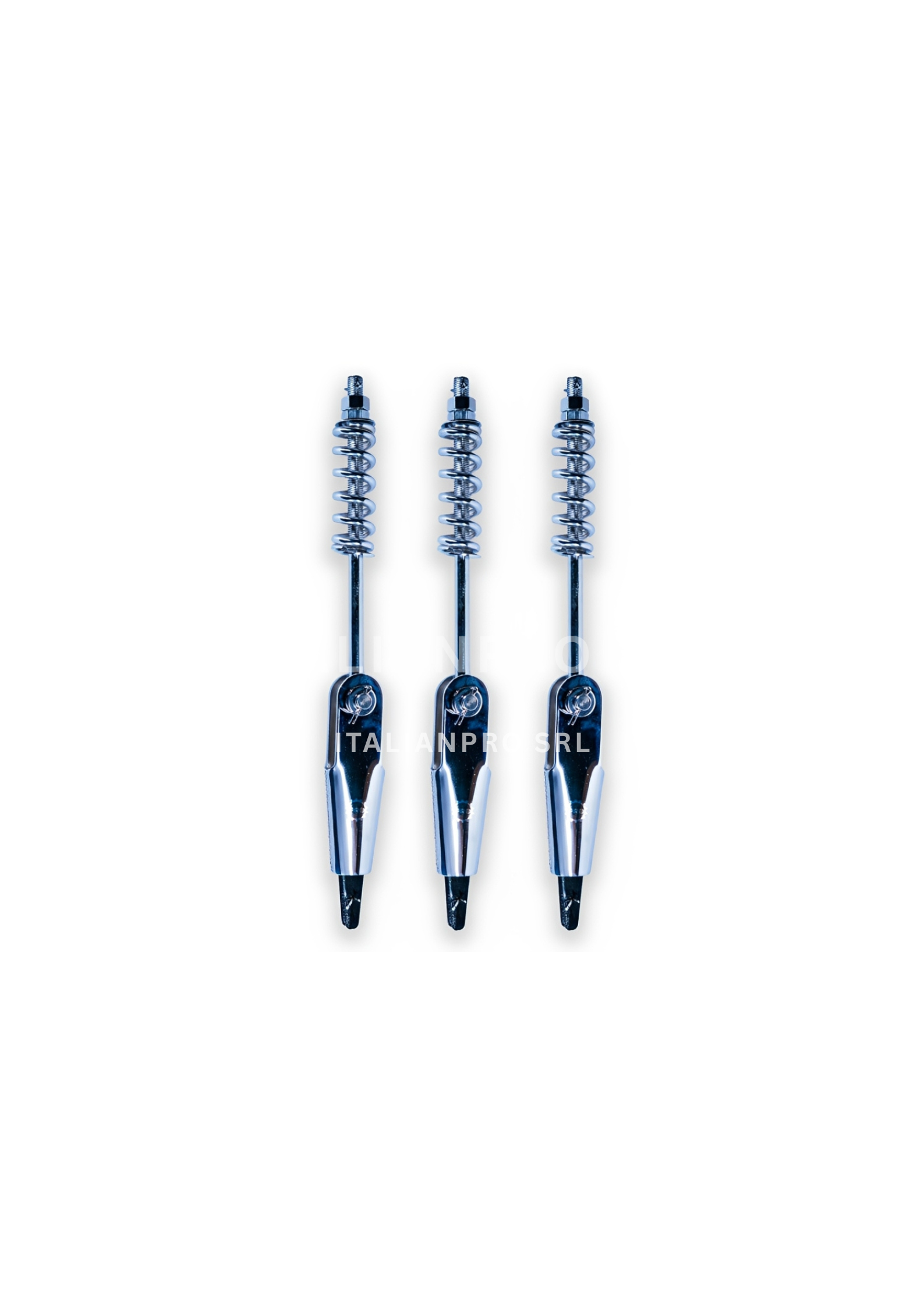
The primary use of these springs is to ensure that the weight of the elevator car and its passengers is distributed equally across all hoisting ropes. Since no two ropes are exactly the same length or tensioned identically, the springs compress at different rates to compensate for these variances. This prevents a single rope from carrying too much load, which would lead to premature wear or snapping.
Vibration Dampening
These springs act as shock absorbers between the elevator car and the hoist ropes. During the start and stop sequences of the lift, the springs absorb the initial mechanical “jerk” and high-frequency vibrations from the motor and pulleys. This results in a much smoother ride for passengers inside the car, as it prevents the metallic vibrations of the ropes from traveling into the cabin.
Rope Longevity
By maintaining consistent tension and absorbing sudden shocks, rope attachment springs significantly extend the lifespan of the steel wire ropes and the traction sheave. Without these springs, the constant friction and uneven pulling would cause the ropes to “saw” into the pulley grooves. The springs provide the necessary flexibility that allows the system to handle the dynamic forces of a moving elevator without constant metal-on-metal strain.
Safety and Maintenance
In many systems, the compression level of these springs serves as a visual indicator for maintenance teams. If one spring is compressed significantly more than the others, it signals that the ropes are out of balance and need adjustment. Furthermore, they provide a buffer during emergency braking situations, helping to distribute the sudden force across the entire attachment assembly rather than hitting the dead-end hitch with a solid impact.